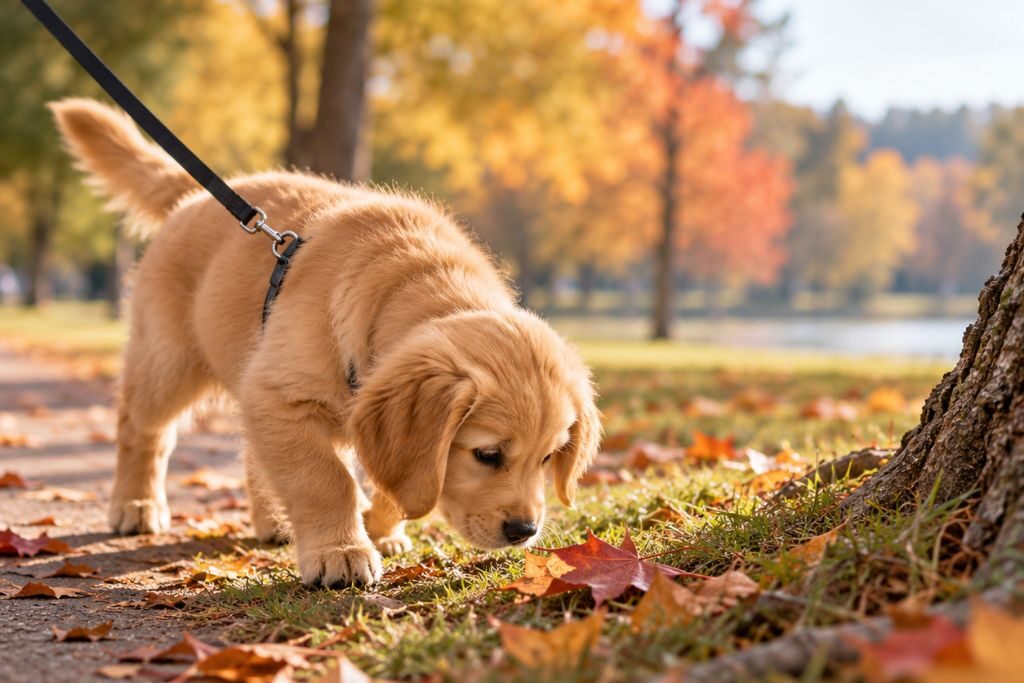
Bring home a new puppy and you’ll quickly notice one thing: that nose is always on the job. Your puppy may sniff the kitchen floor, investigate your shoes, or spend five minutes studying one patch of grass. To them, every scent carries information.
Dogs have a remarkable sense of smell. Dogs can detect many odors at concentrations far below what humans can detect, making scent one of their most important ways of understanding the world.
What Can Your Puppy Learn From a Smell?
A scent can tell your puppy much more than simply what something smells like.
Dogs use their noses to identify people, other animals, food, and familiar places. Scent can also help them follow a trail and recognize something they have encountered before.
Everyday walks give your puppy a chance to explore through scent. Whether you’re strolling through a Castleton neighborhood or taking a different route in Schererville, even a familiar outing can offer something new for your puppy to discover.
Your puppy isn’t being nosy. They’re gathering information.
How Powerful Is a Puppy’s Nose?
The science behind canine smell is genuinely impressive.
- Millions of scent receptors: Dogs have far more odor receptors than humans; the number varies by breed..
- A much larger odor-processing area: The part of a dog’s brain devoted to analyzing smells is about 40 times larger than ours.
- Two nostrils, working independently: Dogs can use differences between their nostrils to help determine where a scent is coming from.
- A second scent system: Their vomeronasal organ, also called the Jacobson’s organ, helps detect chemical signals such as pheromones.
- A specialized way of breathing: Dogs can separate airflow used for breathing from airflow used for smelling, allowing them to keep analyzing scents as they breathe.
Their noses even played an important role long before our dogs became beloved household companions. Smell helped canines find food, locate offspring and mates, and detect potential threats.
Why Is a Puppy’s Sense of Smell a Superpower?
Think about taking a walk around Indianapolis. You might notice the weather, traffic, trees, and people around you. Your puppy is processing an entirely different layer of the experience.
They may detect scents left behind by other dogs, animals, people, food, plants, and countless other sources. A walk through a leafy area near Fort Harrison State Park can therefore become a much richer sensory experience for a dog than it appears to us. A puppy exploring a Schererville neighborhood can encounter new scents simply by taking a different route or investigating a new area.
That’s why sniffing deserves patience. It is one of the ways your puppy learns about their surroundings.
What Does Your Puppy’s Nose Tell You?
Understanding scent can also help you understand your puppy.
A dog who pauses to sniff isn’t necessarily distracted. They may be investigating something important to them. Giving your new companion appropriate opportunities to explore with their nose can make everyday experiences more interesting and mentally engaging.
At Happiness Is Pets, we believe getting to know your new best friend includes learning how they experience the world. Their incredible sense of smell is a big part of that story.
So the next time your puppy becomes completely fascinated by one very ordinary-looking patch of grass, let them investigate for a moment. That little nose may be doing some seriously impressive detective work.
If you’re up for another read, these posts are popular with puppy parents: